King David: The Warrior-Poet

As a boy, David first rose to fame after he slew the Philistine giant Goliath with one stone from his slingshot—a tale that has by now become legend.
But according to the Scriptural book of Samuel, David was secretly anointed king before he ever proved his worth in public. The story tells how God commanded the prophet Samuel to visit Jesse, in order to anoint one of his sons king. Samuel was impressed with the handsomeness of the eldest of Jesse’s sons, and was shocked when God commanded him to anoint the youngest—a mere shepherd.
David went on to serve King Saul in his wars with the Philistines, whereupon he killed Goliath and quickly became famous. David’s skill with the harp led him to be appointed the king’s musician, to play to Saul when the king became depressed. But when Saul became jealous of David and attempted to kill him, David fled. He preserved his friendship with Saul’s son Jonathan, which the latter maintained against the wishes of his father.
Eventually David married Saul’s daughter Michal, and became king of Judea. After Saul’s heir Ish-Boshet was killed, and the people of Israel united as one kingdom under David’s rule, which lasted for 40 years until about 970 B.C. One of David’s crowning historical achievements was the conquest of Jerusalem and its rebirth as the Judean capital and Holy City. His son, Solomon, would one day build the first Holy Temple on the slopes of the Temple Mount.
But David’s rule, though successful, was often challenged by tragedy. He was most deeply affected by the treachery of his sons, in particular his favorite, the handsome and charismatic Absalom.
2000+ tips and recommendations
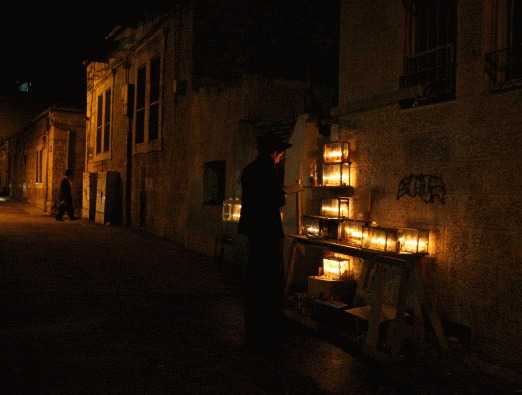
Alright, we'll be the first to admit it. Jerusalem's often chilly and often damp winters don't exactly exude...

In a region known for being one of the first in which early humans settled after leaving Africa, and in a city populated...

Looking for a place to begin your morning in luxury and style? Look no further than the American Colony Hotel, which offers...
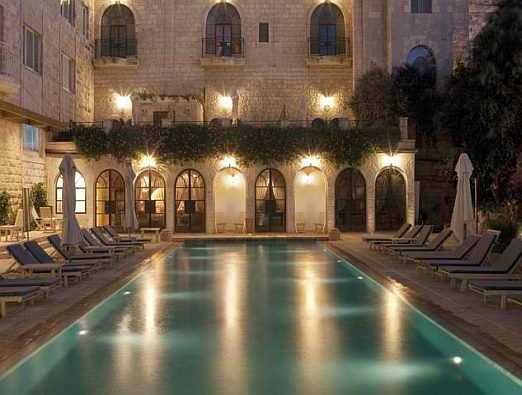
Jerusalem, the city where kings ruled and sultans sat is no stranger to luxury. Today, even the visiting yeoman can find...

Jewish tradition holds that in the times of the First and Second Temples, all the Jewish people would gather in Jerusalem...
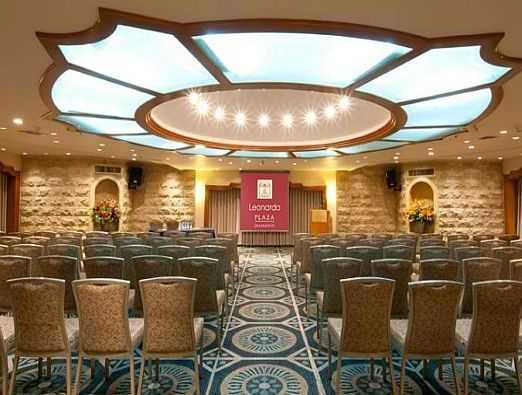
Technically, it's possible to visit Jerusalem without going to the Old City, but it would be hard to say you'd...
Looking for a place to begin your morning in luxury and style? Look no further than the American Colony Hotel, which offers...

The faithful may rhapsodize about the spiritual highs to be reached in the Old City; culture cognoscenti groove on the...

Once upon a time, options for eating out in Jerusalem were limited to local common phenomena such as falafel and schwarma,...
No results to show








|
Text text text
|
||