The Islamic Empire in Jerusalem
Caliph Umar’s conquest of Jerusalem signified many changes to the city, though not so much in terms of its population: For the most part, the Muslims were a minority, regarding the city as a military garrison and congregating near the area of the Temple Mount. The Muslims’ name for Jerusalem was Bayt al-Maqdis.
New laws were instituted for non-Muslims, the majority of the city. These laws included prohibiting non-Muslims from bearing arms or building any structure that would be higher than the mosque. They also required that non-Muslims pay a tax called a jizyah. Some Jews and Christians served as guards on the Temple Mount, which exempted them from paying the jizyah.
While minority populations such as Jews and Samaritans had been persecuted by the Byzantines, they were afforded equal protection under the law by Muslim rule. Christian minorities such as those of the Monophysite and Nestorian sects had also been persecuted under Byzantine rule, so that the Islamic conquest actually worked to their benefit. The Christian holy places were left untouched, and Christian services were permitted to go forward as before.
Perhaps one of the most significant changes to Jerusalem was that Umar decided to allow the Jews to return. Under Byzantine law, Jews had been banned from the Holy City; now seventy Jewish families in Tiberias were invited to settle around the Pool of Siloam. This area had been destroyed by the Persians, leaving only stones behind, which the Jews used to reconstruct new dwellings. They were also permitted to build a synagogue by the Western Wall which was known as “the Cave.”
At that time, the Jews looked favorably upon Muslim conquest of Jerusalem. The Byzantines had made the practice of Judaism illegal, causing the Jews to lend their support first to the invading Persians, and then afterward to the Muslims. The Jews of that time viewed Islam as being closer to Judaism than Christianity, which they believed bordered on idolatry with its worship of a human being.
But ultimately Jerusalem was only a piece of the rapidly growing Islamic Empire, and that empire was rife with political tensions. In 644 A.D., Caliph Umar was killed by a Persian prisoner of war, and the ensuing wars that erupted were the beginning of a long-term feud within Islam. More immediately, they led to the start of a new era in Jerusalem—that of the Ummayad Dynasty.
2000+ tips and recommendations
Alright, we'll be the first to admit it. Jerusalem's often chilly and often damp winters don't exactly exude...
In a region known for being one of the first in which early humans settled after leaving Africa, and in a city populated...

Looking for a place to begin your morning in luxury and style? Look no further than the American Colony Hotel, which offers...
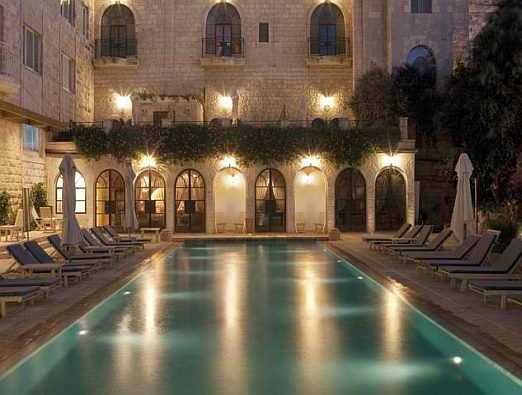
Jerusalem, the city where kings ruled and sultans sat is no stranger to luxury. Today, even the visiting yeoman can find...
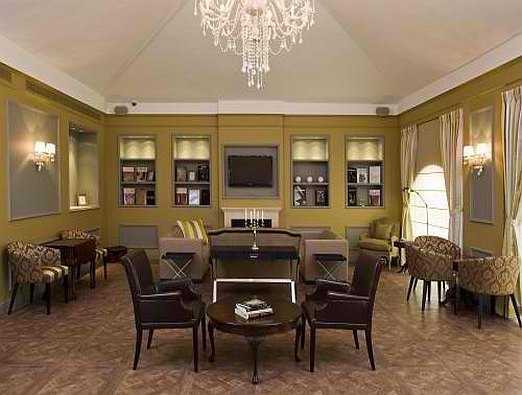
Jewish tradition holds that in the times of the First and Second Temples, all the Jewish people would gather in Jerusalem...
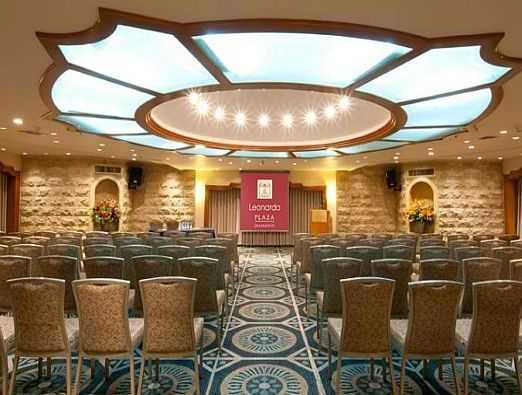
Technically, it's possible to visit Jerusalem without going to the Old City, but it would be hard to say you'd...
Looking for a place to begin your morning in luxury and style? Look no further than the American Colony Hotel, which offers...

The faithful may rhapsodize about the spiritual highs to be reached in the Old City; culture cognoscenti groove on the...

Once upon a time, options for eating out in Jerusalem were limited to local common phenomena such as falafel and schwarma,...
No results to show








|
Text text text
|
||